
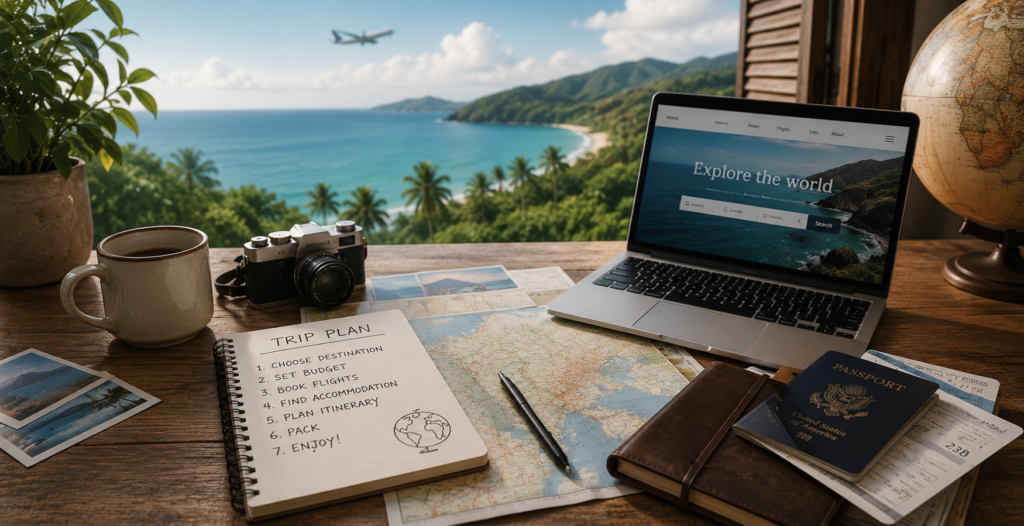
How to Plan a Trip From Scratch: A Step-by-Step Guide for Stress-Free Travel
Planning a trip should be exciting.
After all, you’re preparing for a new adventure, new experiences, and memories you’ll carry for years.
But if you’ve ever stared at dozens of browser tabs, hundreds of hotel options, and endless destination guides wondering where to start, you’re not alone.
Many people feel overwhelmed before they even book their flights.
The good news is that trip planning doesn’t have to be complicated.
Over the years, I’ve developed a simple process that helps me plan everything from weekend getaways to longer international adventures without feeling overwhelmed.
This guide walks you through exactly how to plan a trip from scratch, step by step.
Step 1: Decide What Kind of Trip You Want
Before choosing a destination, ask yourself a simple question:
What experience am I looking for?
Many travelers make the mistake of picking a destination first.
Instead, start with the experience.
For example:
- Relaxing beach escape
- City break
- Road trip
- Wildlife adventure
- Hiking holiday
- Cultural experience
- Photography trip
Once you know what type of trip you want, choosing a destination becomes much easier.
Questions to Ask Yourself
- Do I want adventure or relaxation?
- Am I traveling solo, with friends, or with family?
- What season will I be traveling?
- How much time do I have available?
These answers will help narrow your options dramatically.
Step 2: Set a Realistic Budget
One of the biggest causes of travel stress is poor budgeting.
Before researching flights, determine how much you’re comfortable spending.
Your budget should include:
Transportation
- Flights
- Trains
- Rental cars
- Public transportation
Accommodation
- Hotels
- Hostels
- Apartments
- Guesthouses
Daily Expenses
- Food
- Activities
- Entrance fees
- Souvenirs
Emergency Buffer
Always leave room for unexpected costs.
I typically add an extra 10–15% to my planned budget.
You’ll rarely regret having extra flexibility.
Step 3: Choose Your Destination
Now comes the fun part.
With your travel goals and budget established, it’s time to choose where you’re going.
When evaluating destinations, consider:
Weather
Research average temperatures and rainfall.
A destination can feel completely different depending on the season.
Costs
Some destinations offer significantly better value than others.
Travel Time
A long-haul destination may not make sense for a short weekend trip.
Personal Interests
Choose destinations that genuinely excite you rather than simply following trends.
The best trips are often the ones that align with your personal interests.
Step 4: Research Entry Requirements
Before booking anything, verify:
- Passport validity requirements
- Visa requirements
- Vaccination requirements
- Entry regulations
Many countries require your passport to remain valid for at least six months beyond your arrival date.
Checking these requirements early can prevent expensive mistakes later.
Step 5: Book Your Flights
Flights often represent one of the largest travel expenses.
When booking flights:
Compare Multiple Dates
Being flexible by even one or two days can result in significant savings.
Consider Nearby Airports
Alternative airports sometimes offer cheaper options.
Book Early—but Not Too Early
For most international trips, booking several months in advance often provides a good balance between availability and pricing.
Step 6: Book Accommodation
Accommodation can shape your entire travel experience.
Don’t simply book the cheapest option.
Look for:
Location
A central location often saves money on transportation.
Reviews
Read recent reviews carefully.
Amenities
Consider:
- Wi-Fi
- Breakfast
- Laundry facilities
- Parking
- Kitchen access
Choosing the right location can dramatically improve your trip.
Step 7: Build a Flexible Itinerary
A common mistake is trying to schedule every minute.
Instead, create a flexible framework.
Prioritize
Choose:
- 3–5 must-see attractions
- Key activities
- Important reservations
Leave Free Time
Some of your favorite travel memories may come from unexpected discoveries.
A flexible itinerary creates space for spontaneity.
Step 8: Plan Transportation
Once flights and accommodation are booked, consider how you’ll move around.
Research:
- Public transportation
- Rental cars
- Train systems
- Airport transfers
Knowing this information beforehand reduces stress upon arrival.
Step 9: Purchase Travel Insurance
Travel insurance isn’t exciting.
But neither is losing luggage, missing flights, or dealing with unexpected medical expenses.
Insurance can help protect your trip investment and provide peace of mind.
Look for coverage that includes:
- Medical emergencies
- Trip cancellation
- Delays
- Lost baggage
Step 10: Create a Packing Plan
Don’t wait until the night before departure.
Create a packing checklist several days in advance.
Focus on:
- Essentials
- Versatile clothing
- Electronics
- Travel documents
Packing early reduces stress and helps prevent forgotten items.
Step 11: Download Useful Travel Apps
Before leaving home, download apps that may be useful during your trip.
Examples include:
- Maps
- Translation apps
- Airline apps
- Accommodation apps
- Currency converters
Having these installed beforehand saves time and frustration later.
Step 12: Prepare for the Unexpected
Travel rarely goes exactly as planned.
Flights get delayed.
Weather changes.
Plans evolve.
Instead of trying to control every detail, prepare yourself to adapt.
Some of the best travel stories begin when things don’t go according to plan.
My Simple Travel Planning Formula
Whenever I plan a trip, I follow this order:
- Decide the experience I want.
- Set a budget.
- Choose a destination.
- Research requirements.
- Book flights.
- Book accommodation.
- Create a flexible itinerary.
- Arrange transportation.
- Buy insurance.
- Pack.
This process keeps planning simple and prevents feeling overwhelmed.
Final Thoughts
Travel planning doesn’t need to be perfect.
In fact, chasing the perfect itinerary often creates unnecessary stress.
The goal isn’t to plan every detail.
The goal is to create enough structure that you can travel confidently while leaving room for adventure.
The world is full of incredible destinations waiting to be explored.
The hardest part is often simply getting started.
Choose a destination.
Book the ticket.
And begin the adventure.